- Handyman
- Home Safety & Security
- Installation & Setup
Childproofing Installation
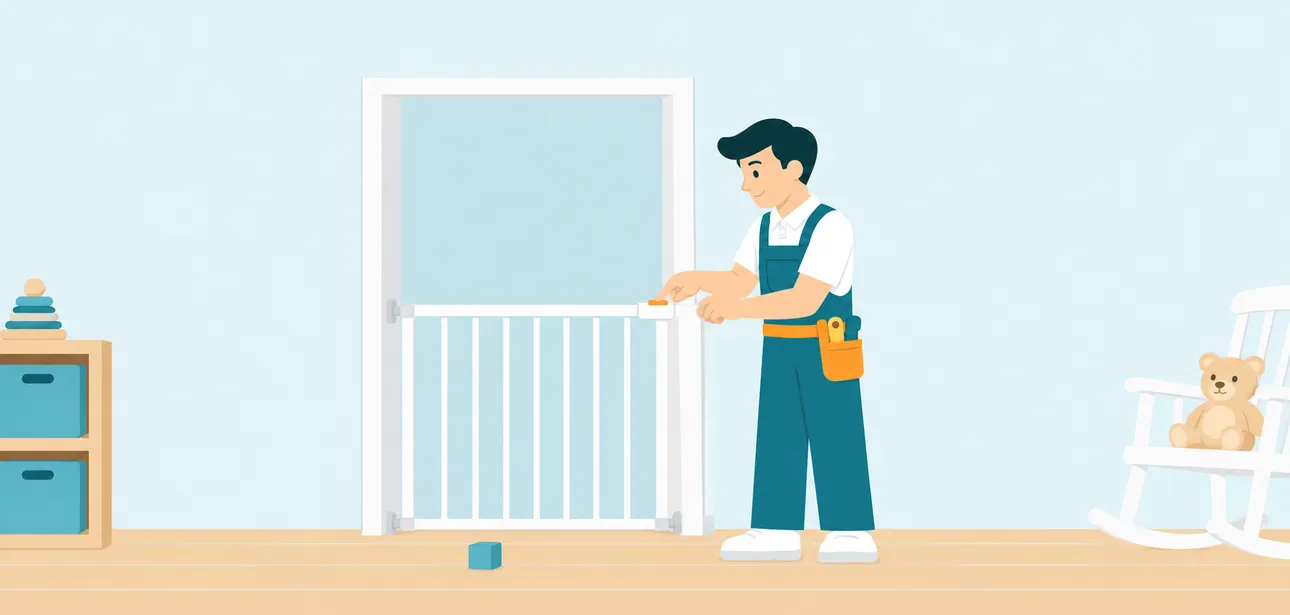
Is your baby starting to crawl or learning to walk, and you'd like to get your home ready? Your handyman can first walk through your home and recommend suitable safety products, then, following the product instructions, install stair gates and doorway gates, anchor tall furniture and TVs to the wall, add child locks to cabinet doors and drawers, fit window stops or window guards, and add accessories such as outlet covers and corner guards. When the work is done, your handyman tests each item and shows you how to use it.
- Service area
- Vancouver, Burnaby and Richmond
Common issues
Your baby will soon start crawling
If you're not sure which areas of your home need attention, your handyman can first check the stairs, furniture, cabinet doors, windows and outlets, recommend the products you need and where to install them, and then arrange the installation.
Gates needed at the top and bottom of the stairs
The top of the stairs generally needs a hardware-mounted (screwed-in) gate, and the gate can only open toward the landing, not toward the stairs; at the bottom of the stairs and in doorways, you can choose a pressure-mounted or hardware-mounted gate according to the product instructions, and some local health guidance also recommends a hardware-mounted gate at the bottom of the stairs.
No place to mount a gate on banister posts or glass railings
Round or square banister posts can use a banister mounting kit, glass railings can use a dedicated clamp kit, and where there is no suitable mounting point a wooden mounting board can be added, to reduce drilling into the railing.
Your child likes climbing dressers and bookcases
Anchor tall furniture and TVs to the wall and add anti-climb locks to the top drawers to reduce the risk of tip-overs.
Medicines and cleaning products are kept in low cabinets
Adhesive, screw-on or magnetic child locks can be added to cabinet doors, drawers, the fridge and the toilet.
Worried about your child falling from a window
Vertical or horizontal sliding windows can be fitted with window stops; other window types can have window guards with an emergency release installed, within the product's stated range of use.
You rent and don't want to drill
Methods that need less drilling, such as pressure-mounted gates, banister mounting kits and adhesive child locks, can be considered first; if drilling is needed, please get your landlord's consent first.
What the pro will do
- 1
Your handyman finds out your baby's age and the areas and number of items to be handled, for example the top or bottom of the stairs, doorway widths, whether each side of a gate is a wall, a banister post or a glass railing, the furniture or TVs to be anchored, the number and material of cabinet doors, and the window types and which floor they are on; if you have already bought products, please provide the model numbers and instructions, and let your handyman know whether your home is a rental or a strata unit.
- 2
On site, your handyman inspects your home as needed, checks whether the products suit the site, checks the available mounting points and the wall material, and confirms the scope of work and the cost. If extra mounting kits, buying products for you or other additional work is needed, your handyman will confirm the details and cost with you first; work outside the scope of this service must be arranged separately.
- 3
Your handyman installs the safety gates, anti-tip anchors, child locks, window devices and other accessories following the product instructions.
- 4
Your handyman tests each item: gate opening, closing and latching, child locks, anti-tip anchoring and how to release the window devices; then shows you how to operate them, explains which items need curing time or regular checks, and returns the product instructions to you.
Good to know
Take photos and measurements first
Take photos of the top and bottom of the stairs and of doorways (including the front and both mounting sides), measure the opening widths, and note whether each side of a gate is a wall, a wood post, a banister post or glass; this helps your handyman recommend suitable products and accessories.
Keep the product instructions
Different gate models have different requirements for mounting points, distance from the edge of the step and opening direction; please keep the instructions and model information, as the instructions take precedence during installation.
Don't use old gates or pet gates
Health Canada recommends not using old gates made before 1990, and pet gates should not be used in place of child safety gates; before installation, you can check whether your products and furniture have been recalled.
Adhesive child locks need time
Some adhesive products take about 24 hours to reach full strength, and should not be pulled hard during that time; afterwards, give the door or drawer a firm pull, and if the lock isn't secure, a screw-on version can be used instead. Adhesion is harder to guarantee on oily surfaces, particleboard, old paint or refinished surfaces.
Child locks don't replace safe storage and supervision
Child locks only make things harder to open, and children may learn to open them as they grow; dangerous items such as medicines and cleaning products should be stored up high and locked away, and magnetic keys should also be kept out of children's reach.
Window screens don't prevent falls
Window screens can't hold a child's weight; please move climbable furniture such as beds, sofas and bookcases away from windows, and keep a way for adults to open bedroom windows quickly for escape.
Check regularly
Regularly check whether gate hardware and mounting have come loose; if a pressure-mounted gate shifts, reinstall its wall cups; once a child can climb over or push open a gate, stop using it.
Local tips
Watch for window falls as the weather warms up
BC Children's Hospital reminds parents every spring and summer to pay attention to window and balcony safety. In 2025, 23 children visited the hospital's emergency department for injuries from falling from a window or balcony, up 53% from 15 in 2024.
Most window falls happen at home
Fraser Health notes that 96% of the child window-fall cases it describes happened at home; children can get through a gap about 12 cm wide, and it recommends that window openings be no more than 10 cm, while keeping devices that can be released in case of fire.
Falls among young children are often linked to furniture
According to the BC Injury Research and Prevention Unit, hospitalizations of children under 1 from falls are most commonly linked to beds, chairs or other furniture; the unit recommends stair gates and window guards to reduce the risk of falls.
Child poisoning and help line
Unintentional poisoning is the second leading cause of injury hospitalization for children aged 4 or under in BC. If you suspect your child has swallowed something harmful, call the BC Drug and Poison Information Centre: 1-800-567-8911 (Metro Vancouver 604-682-5050).
Anti-tip anchoring also helps with earthquake preparedness
PreparedBC recommends anchoring tall furniture such as bookcases, cabinets and shelving units to a wall stud, and adding latches to cabinet doors; anchoring furniture for your child is also in line with local earthquake preparedness advice.
Health authority resources
Vancouver Coastal Health offers a home safety checklist for children aged 0 to 5, and its public health nurses provide support from pregnancy until a child turns 5; we have not yet seen a health authority offering in-home safety assessments or free safety products.
Rental and strata units
Before a tenant mounts a gate with screws or installs a window device on a window frame, they generally need the landlord's consent first; in a strata unit, drilling into exterior window frames or original handrails may require written approval from the strata.
This service only installs child safety devices inside your home unit, including safety assessments and product recommendations, safety gates and off-the-shelf mounting kits, anti-tip anchoring for furniture and TVs, mechanical or magnetic child locks, window stops, window guards with an emergency release, window covering cord cleats and tool-free accessories. It does not include electrical work such as replacing outlets or outlet cover plates, electronic or keypad locks, replacing window or door hardware, opening walls or altering and repairing railings, custom brackets not covered by the gate manufacturer's instructions, fixed window guards without an emergency release, assembling new furniture, TV wall mounting, appliance anti-tip brackets, gas appliances, gates or safety netting in shared hallways, common stairwells and balconies, pool fencing, patching and painting after removal, taking away or passing on old products, or products that have been recalled with instructions to stop using them. Safety devices can only reduce risk; they can't replace adult supervision, and children may gradually learn to open or get past them. Installation methods follow the product and furniture instructions, and some products aren't suitable for certain window types, surfaces or mounting points; adhesive products need time to cure. Escape windows such as bedroom windows will only be fitted with products that have an emergency release that adults can release by hand. Consent for drilling in a rental or strata unit is subject to confirmation from the landlord or strata.
Post this job in the app
Describe the job, add photos and get quotes from pros nearby. Posting is free for clients, and you don’t have to hire anyone.