- Handyman
- Home Repairs
- Home Safety & Security
- Installation & Setup
Door Hinge, Handle and Lock Replacement
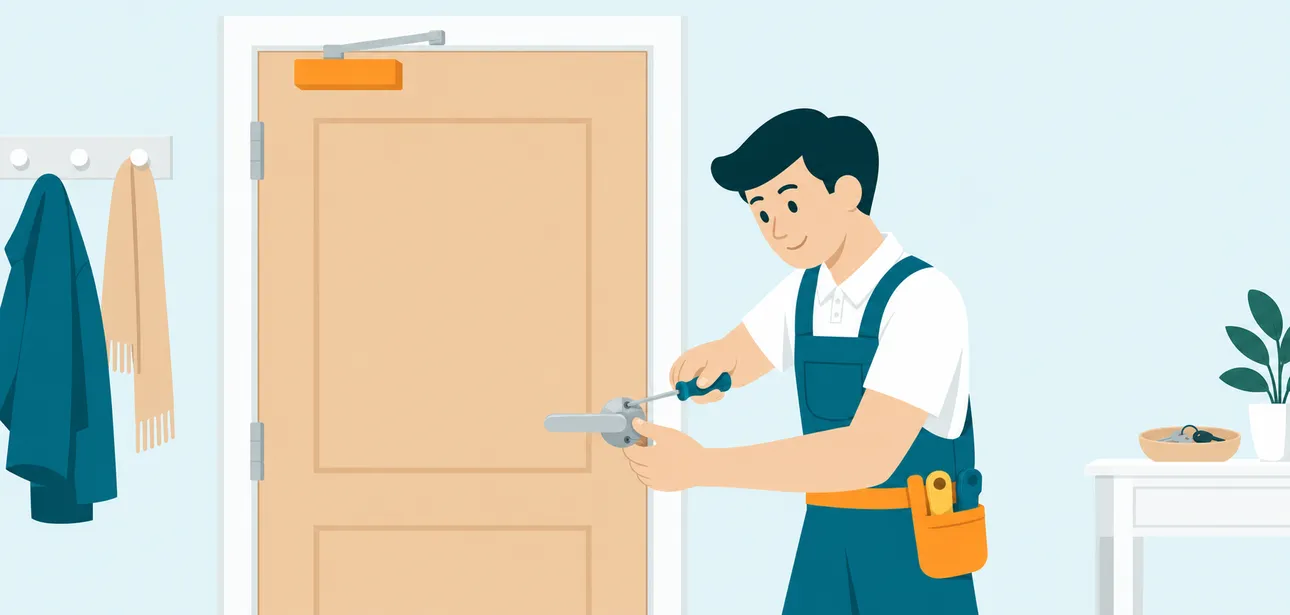
Is a door hinge loose or squeaking, a handle wobbly or a deadbolt hard to lock? Or have you just moved into a new home and want to change the locks or switch to a smart lock? Your handyman checks the door type, dimensions and existing cut-outs, then replaces or adds small door hardware such as hinges, handles, locks, deadbolts, handlesets, battery-powered smart locks or keypad locks, door closers and door stops. They can also rekey your existing locks or reinforce the strike. Lock-related work is handled by a handyman who holds the appropriate BC security services licence, and when the work is done, each door is tested for opening and closing, latching and locking.
- Service area
- Vancouver, Burnaby and Richmond
Common issues
Moving into a new home or lost your keys
If you're not sure how many people have had keys before, you can have the locks changed, or have your existing locks rekeyed so the old keys no longer work.
Want several locks to use the same key
If the locks on your front door, back door and the door to the garage share the same keyway, they can be rekeyed to use the same key.
Want to switch to a smart lock or keypad lock
Replace your existing deadbolt with a battery-powered smart lock, or add a retrofit smart lock on the inside only, and have the codes and app set up.
Want to add a deadbolt or reinforce the strike on an entry door
If your entry door only has a lock in the handle, a deadbolt can be added; a sturdier strike can also be installed and secured with longer screws into the wood framing behind the door frame.
Hinges loose, rusty or squeaky
After years of use, hinges can wear or their screws can come loose, making the door hard to open and close or noisy; your handyman checks them and replaces them with suitable hinges.
Changing handle styles throughout the home
When renovating or updating, you may want matching handle and hinge finishes throughout the home, for example switching from knobs to levers, including lockable handles for bathrooms and bedrooms.
The door to the garage no longer closes on its own
The door leading to the garage must stay self-closing; if a spring hinge or door closer has stopped working, it can be replaced and readjusted.
Door hits the wall or you want to see who's outside
A door that swings open too far can damage walls or furniture, so a door stop can be added; a peephole can be added to an entry door.
What the pro will do
- 1
Your handyman finds out how many doors need work, where each door is and which hardware or locks need replacing, and collects photos of the door edge, the hinge side and both the inside and outside of the handle or lock. If it's a condo unit entry door, a rental unit or a fire-rated door, please let them know in advance and have written approval from the strata or landlord ready.
- 2
Your handyman checks the size of the hinges, handles and locks, the backset, the bore holes and the door thickness, whether the existing deadbolt locks smoothly with the door closed, and whether the door has a fire label or a self-closing device, to confirm the new hardware is compatible. Work starts only after the scope and price are confirmed.
- 3
Your handyman removes the old hardware, prepares the hinge recesses, bore holes or strike recess as needed, and installs the new hardware, or rekeys and aligns the lock cylinders; for smart locks, codes and the app are set up as you request. If they find on site that door adjustment, door frame repair, replacing the whole door, lockout service or other work not covered by this service is needed, your handyman first stops that part of the work and explains; this work needs to be arranged separately.
- 4
Your handyman tests each door's opening and closing, latching, locking, every key and the self-closing function, hands over all keys and code settings, cleans up the work area, and handles the removed old hardware as arranged in advance.
Good to know
Take photos and measurements in advance
Photograph where the latch or bolt sits on the door edge, the hinge side and both the inside and outside of the handle or lock, and measure the door thickness and the distance from the door edge to the centre of the lock hole (backset). This helps your handyman prepare compatible hardware in advance.
Check the specs before buying a smart lock
The door thickness, bore holes and Wi-Fi band a smart lock works with vary by model, and some models only support 2.4 GHz; retrofit models that only replace the inside part generally only work with single-cylinder deadbolts.
Know your smart lock's backup options
Some smart locks come with a physical key, while others have no key and use external battery terminals for temporary power; when the battery runs low, replace it with brand-new batteries as soon as possible.
A new lock may not fix a door that doesn't close properly
If you have to push or pull the door to lock the deadbolt, or the latch doesn't line up with the frame, the door may be sagging or the frame may have shifted; replacing the lock or handle alone may not fix this, and door adjustment needs to be arranged separately.
Watch for fire labels and self-closing devices
If there's a fire label on the door edge or hinge side, or the door closes on its own, please let your handyman know in advance; hardware on these doors must be compatible, approved products, and the self-closing function must be kept.
Check the packaging of hardware you supply
If you buy hardware or locks yourself, first confirm the model suits your door thickness and bore holes, and keep the packaging and instructions so your handyman can check them.
Routine care
Hinges can be lubricated with a silicone lubricant once a year; if a lock cylinder doesn't turn smoothly, use graphite powder and avoid general-purpose spray lubricants.
Local tips
The platform arranges licensed handymen for lock work
Under BC's Security Services Act, work such as rekeying, changing lock cylinders or coding locks for others requires the appropriate licence issued by the provincial Security Programs Division, and self-employed individuals also need a security business licence. For this service, all lock-related work is arranged with a handyman who holds the appropriate licence.
No double-cylinder locks on residential exit doors
The BC Building Code requires residential exit doors and suite doors to be openable from the inside without a key, so double-cylinder deadbolts that need a key on the inside can't be installed. Unit entry doors that open onto a common corridor and have a self-closing device also can't be set to lock automatically.
Condo unit entry doors are common property
BC Civil Resolution Tribunal (CRT) strata cases show that unit entry doors facing a common corridor are usually the strata's common property; changing the lock or adding a smart lock without the strata's written approval may breach the bylaws, even if the new hardware only fits over the original lock and looks similar. The actual rules depend on your strata's bylaws and strata plan.
Unit entry doors may be fire-rated doors
In condos built under the current BC Building Code, unit entry doors are usually part of a fire separation and must stay self-closing and latching; the BC Fire Code doesn't require these unit entry doors to display a "FIRE DOOR KEEP CLOSED" sign, so the absence of a sign doesn't mean the door isn't fire-rated.
Changing locks in a rental unit
Under BC's Residential Tenancy Act, a tenant must get the landlord's written consent before changing the unit's locks; if the tenant asks at the start of a new tenancy, the landlord is responsible for rekeying or changing the locks. If a tenant replaces landlord property such as interior door handles, it's best to get the landlord's consent first, or restore the originals before moving out.
The door to the garage must close on its own
The BC Building Code requires the door between a home and an attached garage to be tight-fitting, weatherstripped and equipped with a self-closing device; this function must be kept when replacing hinges or door closers.
Police advice on preventing break-ins
The Vancouver Police Department says about half of residential break-ins happen through unlocked doors or windows, and recommends using deadbolts whose bolt extends about 1 inch on exterior doors, securing the strike and hinges with long screws into the wood framing in the wall, and changing the locks when keys are lost or when moving into a new home.
Recycling old hardware
Several Metro Vancouver cities don't accept metal door hardware in blue recycling bins; it can generally be taken to a scrap metal depot. How to dispose of it depends on your city's guidelines.
This service covers hinges, handles, mechanical locks, deadbolts, handlesets, battery-powered smart locks or keypad locks, rekeying, strike reinforcement and door closers on existing residential doors, as well as small door hardware such as door stops, kick plates and peepholes. It doesn't include lockouts, emergency entry or broken key extraction; master key or restricted keyway systems, cutting keys by code, fob or access card duplication, or safes; internal lock repairs without replacing the lock; door edge modifications to convert a mortise lock to another lock type; sliding doors and multipoint locks; door adjustment without replacing hardware, replacing doors or preparing new doors, door frame and door material repairs, or repainting and refinishing door slabs; electronic access control or intercom systems that need hardwiring; smart doorbells and cameras; weatherstripping and door sweeps; or roll-up garage doors, window hardware and cabinet hinges. Double-cylinder locks that need a key on the inside are not installed on residential exit doors. On fire-rated doors and condo unit entry doors, only approved equivalent hardware can be replaced within the existing cut-outs, and the latching and self-closing functions must be kept; re-boring or modifications that would affect the fire rating are not covered by this service. If the bore holes are oversized, or the door thickness or backset isn't standard, some hardware may not install directly. Replacing hardware can't correct a sagging door or a shifted frame, and no lock can guarantee complete protection against break-ins. Smart lock battery life, connectivity and app status depend on the product. The actual approach, date and time slot are subject to your handyman's on-site assessment, property rules and your city's requirements.
Post this job in the app
Describe the job, add photos and get quotes from pros nearby. Posting is free for clients, and you don’t have to hire anyone.