- Handyman
- Home Repairs
- Routine Maintenance
Caulking & Resealing (Tubs, Sinks, Windows)
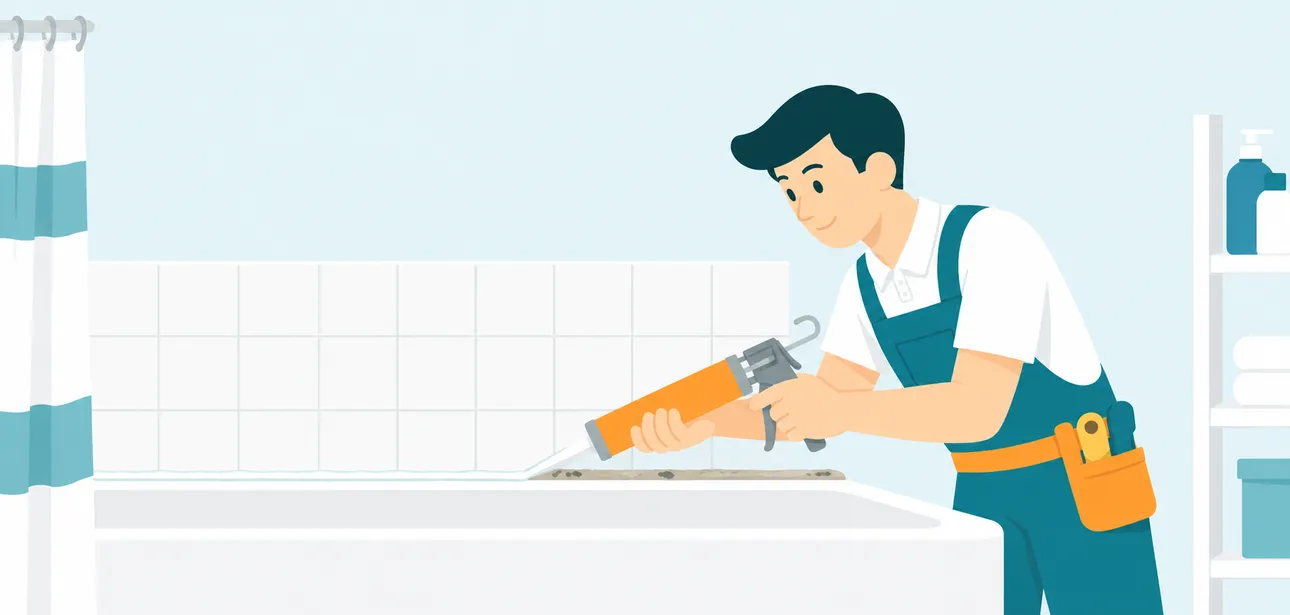
Is the caulk around your bathtub turning black, cracking or pulling away, are there gaps along the seams of your bathroom sink or kitchen countertop, or has the old caulk around your windows aged? Your handyman fully removes the failed old caulk and recaulks with a suitable product chosen for the location, surface material and joint width. This covers bathtubs and showers, bathroom sinks, kitchen countertops and backsplashes, toilet bases, interior window frames and trim, as well as exterior window and door perimeters and exterior wall joints that can be reached from the ground, a balcony or a ladder, restoring a neat, continuous seal along the joints.
- Service area
- Vancouver, Burnaby and Richmond
Common issues
Caulk around the bathtub has turned black
Black spots on the caulk that remain after cleaning or quickly come back may mean mould has grown into the old caulk or underneath it. The old caulk needs to be removed and the joint recaulked.
Caulk is cracked, shrunken or pulling away
The caulk around the bathtub, shower or bathroom sink has cracks or gaps, or has separated from the wall. The old caulk needs to be removed and the joint resealed.
Gap between the kitchen countertop and the wall
The old caulk between the countertop and the backsplash or wall, or around the rim of the kitchen sink, has failed and needs to be recaulked.
Caulking the toilet base
Caulk is applied along the front and both sides of the toilet base, leaving a short section at the back unsealed so that any leak underneath can be noticed later.
Gaps around window frames, door frames or baseboards
Cracks have opened between interior window frames, casing or baseboards and the wall, and need to be refilled with a paintable product.
Aged caulk around exterior windows and doors
The old caulk between exterior window or door frames and the exterior wall is cracked or coming off, and needs to be removed and recaulked in dry weather.
What the pro will do
- 1
Your handyman gets details on the address, property type, the locations and number of spots to be caulked, the approximate length of interior trim or exterior wall joints, surface materials, how blackened or cracked the old caulk is, the year the home was first occupied, and when the old caulk was last applied or any related records, and collects a wide shot and a close-up photo of each location. For exterior locations, your handyman also asks about the height in storeys, whether the area falls under strata management, and where the weep holes under the windows are.
- 2
Your handyman confirms whether the old caulk needs to be tested for asbestos first. If there is no lab report confirming the old caulk is asbestos-free, no record showing it was applied on or after December 30, 2018, and the home was not first occupied on or after that date, a qualified person must take samples for testing before it is scraped off. Testing and the removal of asbestos-containing materials are not part of this service and must be arranged separately.
- 3
Your handyman inspects the old caulk, surface materials, joint width, extent of mould and weather conditions on site, and starts only after confirming the products to be used, the scope of work and the cost. If softened walls, loose tiles, recurring leaks, widespread mould or other work outside the scope of this service is found, your handyman will stop first and let you know, and that part must be arranged separately.
- 4
Your handyman fully removes the old caulk and any residue, cleans and dries the surface according to the product instructions, adds backer rod where needed, then applies a continuous bead of caulk and tools it smooth. For exterior joints, the weep holes and drainage gaps in window frames are left open.
- 5
Your handyman takes away the old caulk and tape, and, based on the product actually used, tells you when the area can get wet, when it can be exposed to rain or painted, and how to look after it with routine cleaning.
Good to know
Send photos and details in advance
Provide a wide shot and a close-up photo of each location, where the old caulk is cracked or blackened, and photos of the weep holes under exterior windows. If you have kept invoices for the old caulk work or an asbestos test report, please provide them too.
Plan for time without the bathroom
Depending on the product, the time before the area can get wet ranges from tens of minutes to more than a day, and is also affected by temperature and humidity. Please plan your bathroom use around the actual product time your handyman gives you.
Mention in advance if you need painting
Some silicone products cannot be painted. If you need the caulk painted or colour-matched afterwards, please tell your handyman in advance so a suitable product can be chosen. Painting must be arranged separately.
Routine cleaning
Cured silicone caulk can be cleaned with mild soapy water; avoid cleaners that contain alcohol. After cleaning, rinse off any residue and wipe dry to reduce mould spots caused by soap residue.
Keep the bathroom ventilated
Run the exhaust fan during and after showers or baths so the bathroom dries faster, which helps reduce mould on the caulk.
Check regularly
Check the caulk around the bathtub, shower, bathroom sink and toilet every year for cracking, shrinking or pulling away. Keep the weep holes under windows clear, and do not seal them yourself.
Caulking the toilet base
Caulking the toilet base is optional, and no related requirement has been found in BC regulations so far. Caulking also cannot repair the wax seal or flange under the toilet.
Local tips
Season for exterior caulking
Long-term averages from weather stations across Metro Vancouver show that about 70% of the year's rainfall falls between October and March, with July and August the driest. Exterior caulking needs dry surfaces and suitable weather, so it is easier to schedule in summer and may need to be rescheduled in the fall and winter rainy season. The actual workable conditions and the time before the caulk can be exposed to rain depend on the instructions for the product used. Interior caulking is not affected by the season.
Old caulk and asbestos
Since December 30, 2018, Canada has banned the import, sale and use of asbestos-containing products (with a few exceptions). WorkSafeBC guidance notes that asbestos has been found in caulking and sealant in newer BC buildings constructed as recently as 2018, and that there is no cut-off by construction year alone that can be used to judge it safe. For this reason, unless the old caulk has a lab report confirming it is asbestos-free, there is a record showing it was applied on or after December 30, 2018, or the home was first occupied on or after that date, a qualified person must take samples for testing before the old caulk is scraped off.
Exterior windows and doors in strata units
Under the BC strata Standard Bylaws, exterior windows, doors and the exterior walls themselves are generally repaired by the strata corporation; the strata's registered bylaws apply. If you own a strata unit and need caulking done around exterior windows or doors, please report it to the strata first or get written consent. If you arrange the work yourself, you may not be reimbursed.
Exterior water leaks during a new home warranty
New homes in BC generally come with 5-year building envelope coverage (including water penetration) under the home warranty. If water is leaking in around exterior windows of a newer home, please notify the warranty provider and the builder in writing first. Having a third party recaulk first may affect a future claim.
Rental units
For caulking in the bathroom or around windows of a rental unit, please discuss repair arrangements with your landlord first. Caulk that has failed due to age is a different matter from the tenant's responsibility to clean mould spots off surfaces in routine cleaning; the tenancy agreement and the Residential Tenancy Branch's decision apply.
Disposing of old caulk and caulk tubes
Residential garbage guidelines in Vancouver, Richmond, Coquitlam, Port Coquitlam and Surrey state that old caulk and leftover caulk tubes go in the regular garbage, and BC's Product Care paint and household hazardous waste recycling programs do not accept caulking. In other cities, please follow local guidelines. Old caulk confirmed by testing to contain asbestos is asbestos waste: it must be handled by an asbestos abatement contractor as required and must not go in the regular garbage.
This service only covers removing failed old caulk and recaulking at homes, including bathtubs and showers, bathroom sinks and vanities, kitchen countertops and backsplashes, toilet bases, interior window frames and trim joints, as well as exterior window and door perimeters and exterior wall joints that can be reached from the ground, a balcony or a ladder. It does not include repairs to the source of leaks or to water supply and drain lines, re-securing toilets or bathroom sinks, waterproofing membranes, grout and tile work, bathtub refinishing, water damage and mould remediation, window or door replacement or adjustment, double-pane glass units and window glazing putty, exterior envelope work, sealant renewal programs for an entire building or an entire exterior wall of a multi-unit or strata property, exterior work that needs rope access, a suspended platform (swing stage), an aerial lift or scaffolding, painting, asbestos testing and handling of asbestos-containing materials, or adding caulk over the old caulk as a temporary fix without removing it. If you need any of this work, it must be arranged separately. Recaulking only seals the surface of the joint. It cannot fix problems with waterproofing membranes, leaks inside walls or window and door flashing, and cannot guarantee permanent waterproofing or that mould will not come back. How long caulk lasts and how mould develops are affected by the product, joint movement, ventilation and routine cleaning. Any permit, strata or landlord approval is confirmed based on the actual address and scope of work.
Post this job in the app
Describe the job, add photos and get quotes from pros nearby. Posting is free for clients, and you don’t have to hire anyone.
Related services
- Cabinet Hinge & Drawer Slide Repair
- Door & Window Adjustment (Doors That Won't Close, Sticking Sliding Doors and Windows)
- Floor Spot Repair & Baseboard
- Curtain Track & Blind Installation and Window Screen Repair
- Door Hinge, Handle and Lock Replacement
- Mirror Installation (Bathroom Mirrors, Full-Length Mirrors)