- Handyman
- Home Repairs
- Routine Maintenance
Door & Window Adjustment (Doors That Won't Close, Sticking Sliding Doors and Windows)
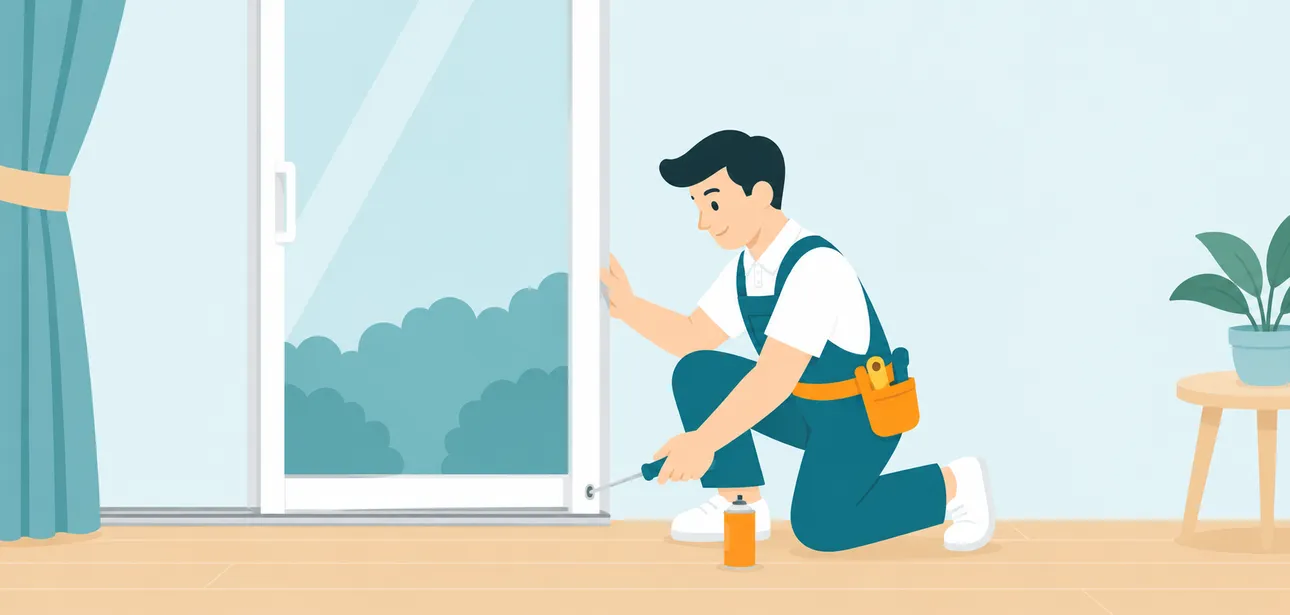
Does a door not close, drag on the floor, or need a hard push before it will latch? Is your sliding glass door getting harder and harder to push or jumping off its track, or does a window refuse to open, or slide back down after you raise it? Your handyman first finds the cause of the problem, then adjusts hinges, door closers, sliding door rollers, closet doors, pocket doors and window hardware, planes the door edge or bottom if needed, and replaces moving parts such as rollers, balances, cranks and weatherstripping. If needed, your handyman can also move or replace the door strike, and adjust, move or replace window locks, so your doors and windows open, close, latch and seal smoothly again.
- Service area
- Vancouver, Burnaby and Richmond
Common issues
Door won't close or rubs the frame
The door sags, the hinges are loose, or the door has swelled with moisture, so it rubs the top of the frame or the latch side and needs a hard push to close.
Door only locks if you lift the handle
The latch or deadbolt doesn't line up. This is often caused by a sagging door or loose hinges, and doesn't necessarily mean the lock itself is broken. If it still doesn't line up after the hinges are adjusted, the strike on the door frame can be moved or replaced.
Door drags on the floor
The door sags, or the bottom of the door drags after thicker flooring or carpet was put in. The hinges may need adjusting or the bottom of the door may need trimming.
Drafts or light around the entry door
The weatherstripping along the door edge or the door bottom seal has aged, the threshold cap is at the wrong height, or the position of the door leaves the weatherstripping unevenly compressed.
Sliding glass door hard to push or off its track
This is usually related to worn rollers, dirt built up in the track or a bent track. If the door panel jumps off the track, avoid pushing it any further.
Closet door or pocket door stuck
Sliding or bifold closet doors come off their tracks or won't close fully, or a pocket door that slides into the wall gets stuck or hangs crooked.
Window won't open or slides down after you raise it
The sash is painted shut, the frame has swelled, or the balance or sash cord is broken, so the window won't move or won't stay open.
Crank window won't open or lock
On casement or awning windows, the crank spins freely, the sash has dropped, or the window lock doesn't line up.
Entry door closes too fast or doesn't close
The door closer or spring hinges need adjusting so the door closes on its own at a suitable speed and latches.
What the pro will do
- 1
Your handyman finds out the address, the property type (house, townhouse or condo), whether you own or rent, the types and number of doors and windows that need work, and what the problem is, and collects photos or short videos of the gap between the door edge and the frame when the door is closed, where it rubs, the hinges, the rollers at the bottom of the sliding door and the track, and the window hardware and brand labels.
- 2
Your handyman checks the cause on site and confirms which parts can be adjusted, which parts need replacing, whether the door or window needs planing, and whether it is a fire-rated door, an exterior door or window that the strata is responsible for repairing, or a newly installed product still under warranty. If the strike for a deadbolt, a lockable handle or a sliding door lock needs to be moved or replaced, or a window lock needs to be replaced, this is assigned to a handyman who holds a BC security services Locksmith licence or works under the supervision of a licensed locksmith. Work only starts after the scope and price are confirmed.
- 3
Your handyman adjusts or repairs the door or window as agreed; if parts need to be ordered, another visit may be needed to finish. If it turns out that the door or window needs replacing, the glass or a lock needs replacing, the door or window frame or the wall needs repairing, a structural assessment is needed, or other work outside this service is needed, your handyman will stop first and let you know, and that part needs to be arranged separately.
- 4
Your handyman tests the full opening and closing, latching, locking, self-closing and sealing of the door or window, cleans up the work area, and explains the basics of routine cleaning and lubrication.
Good to know
Take photos ahead of time
With the door closed, take photos of the gap between the door edge and the frame and where it rubs. For sliding doors, photograph the adjustment holes at the bottom of the door, the rollers and the track; for windows, photograph the crank, the window lock and the brand label on the frame. This helps your handyman work out which parts are needed.
Check the warranty first
If a newly installed door or window has problems, check the manufacturer's or installer's warranty terms first. Planing the door edge or modifying the door or window may affect the manufacturer's warranty.
When a sliding door comes off its track
Sliding glass door panels are very heavy. If one comes off its track, don't force it or take the panel off yourself, as it could fall over or the glass could break.
Keep tracks clean
Regularly vacuum dust and debris out of sliding door and window tracks, then lubricate as the manufacturer recommends. Different parts need different lubricants, so if you're not sure, check the product instructions first.
Self-closing function
Condo unit entry doors, corridor doors and doors from the garage into the house must stay self-closing and latching. Please don't prop them open with a doorstop or remove the door closer.
Watch for several doors and windows having problems at once
If several doors and windows all start sticking within a short time, along with diagonal cracks at wall corners that keep growing, adjustment can only help temporarily, and we recommend arranging a structural assessment separately.
Local tips
Winters are damper
Long-term records from the Vancouver Airport weather station show afternoon relative humidity of about 80% from November to January and about 61% to 62% in July and August. Wood doors and windows swell and shrink with humidity, and some wood doors may stick more easily in the wet season. Sealing the planed surfaces after planing helps reduce moisture being absorbed again.
Paint in older homes may contain lead
About half of homes in Metro Vancouver were built in or before 1990. Paint applied in or before 1990, or paint of unknown age, must be tested before it is planed, sanded or scraped, or be treated as lead paint with measures taken to prevent the spread of lead dust.
Wood windows in older homes
Local businesses say that homes built from 1950 to 1985 in areas such as Burnaby often have wood-framed double hung windows. Older double hung windows are mostly balanced with sash cords and weights, and are often painted shut or have broken sash cords. Local heritage conservation organizations recommend considering repair for old wood windows first, as they may not need to be replaced entirely.
Strata exterior doors and windows
Under BC's Standard Bylaws for strata, exterior doors and windows and doors and windows facing common property (including sliding glass doors) are generally the strata's responsibility to repair; the building's registered bylaws are what actually apply. Please report the problem to the strata or get their consent first; if you arrange repairs yourself, the strata generally may not reimburse the cost. Condo unit entry doors and corridor doors are generally common property, so you should also contact the strata before having them adjusted.
Rental units
Door and window repairs are generally the landlord's responsibility, while tenants are responsible for cleaning interior windows, balcony doors and windows, and their tracks. Before arranging repairs yourself as a tenant, please contact the landlord first. Only situations that meet the conditions for emergency repairs, such as an entry door lock that won't lock and affects safety, can be arranged by the tenant following the procedure in the tenancy rules, with the cost then claimed back from the landlord.
Window rebates don't cover repairs
BC Hydro's window and door rebates only apply to replacing exterior doors and windows by a licensed contractor, and homes in the City of Vancouver are not eligible; adjustments and part replacements aren't covered by the rebates.
Specialist door and window coverage varies by area
Sliding door and window specialists each have different service areas, and there are relatively fewer specialists to choose from on the North Shore and in the Tri-Cities. Uncommon or older model parts may take several days to order.
This service only covers adjustment and minor repairs of existing residential doors and windows, including hinged doors, entry door seals, door closer and spring hinge adjustment, planing doors and windows, sliding glass door rollers and tracks, closet doors, pocket doors, movable window hardware and weatherstripping, as well as moving or replacing door strikes and adjusting, moving or replacing window locks (window lock replacement is handled by a handyman with the appropriate licence). It doesn't include: replacing doors or windows; dealing with broken glass or fogging in double-pane glass; replacing or repairing locks and lockable handles; replacing hinges and door closers; planing or other modification of fire-rated doors; repairing or replacing door and window frames; repairing thresholds or replacing entire thresholds (except adjusting or replacing an adjustable threshold cap); opening up walls to repair pocket doors; wall repairs and repainting entire doors; structural assessment and repairs; testing for and dealing with asbestos or lead paint; powered doors and windows; garage roll-up or overhead doors; window screens and sliding screen doors; repairs to storm doors or hinged screen doors other than adjusting the automatic closer; and cabinet doors. If you need this work, it needs to be arranged separately. Adjustment can only fix problems with the door or window itself and its moving parts. Seasonal swelling and shrinking of wood doors and windows, slight warping of a door within the manufacturer's tolerance, an out-of-square frame or ongoing movement of the house may not be completely eliminated by adjustment. Older model parts may have been discontinued, and actual results depend on the condition of the door or window on site and the parts that can be matched. Strata, landlord consent and permit arrangements are confirmed based on the actual address and scope of work.
Post this job in the app
Describe the job, add photos and get quotes from pros nearby. Posting is free for clients, and you don’t have to hire anyone.