- Plumbing & Drain
- Home Repairs
- Home Safety & Security
Drain Unblocking
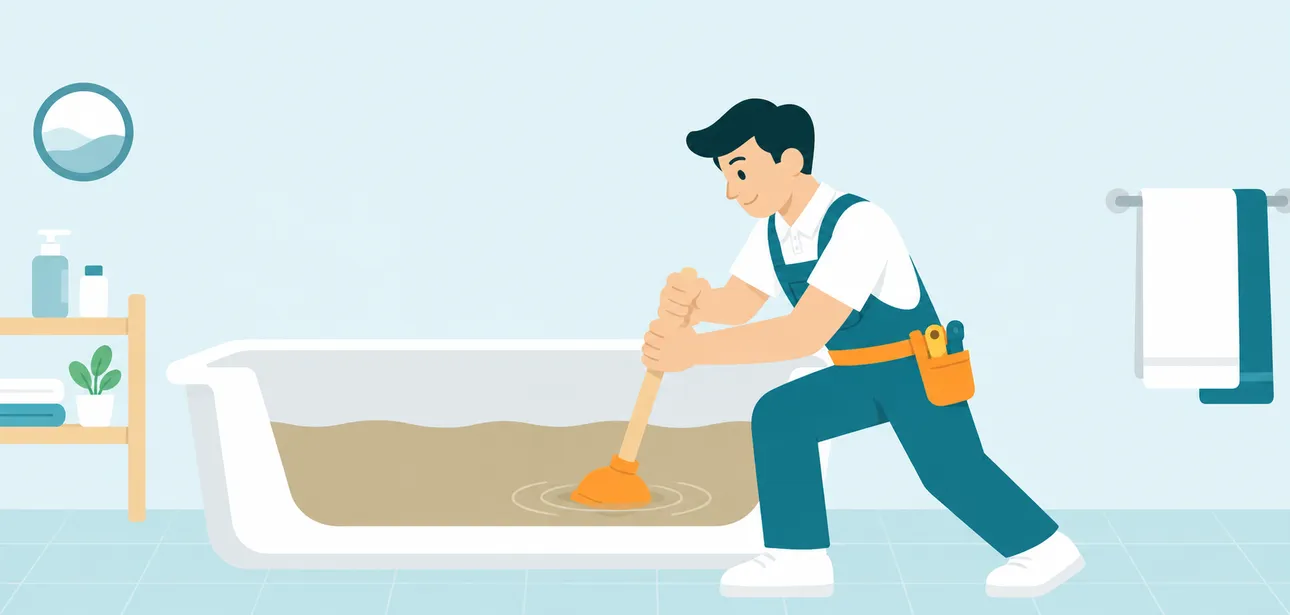
Is your sink draining slowly, your toilet blocked, or are several drains backing up at once? Your plumber can check the fixtures, branch lines, main sewer line and outdoor storm drainage at your home, and clear them using a method suited to the condition of the pipes. If needed, a camera inspection can also be done to look at visible blockages or defects.
- Service area
- Vancouver, Burnaby and Richmond
Common issues
One drain is slow or fully blocked
A problem with a sink, bathtub/shower, toilet, laundry drain or floor drain. It needs to be worked out whether the issue is near the fixture or further down the line.
Problems at several places at once
Water comes up at other fixtures, you hear gurgling, or drains back up when water is draining. The connected drains need to be checked; the blockage can't be located from symptoms alone.
The drain keeps blocking again after clearing
A camera inspection can be done as needed to check the reachable, visible sections of pipe for buildup, tree roots or signs of damage.
Outdoor drainage isn't flowing well
Perimeter drains, catch basins or sump pits may have built up silt; water pooling on rainy days may also have other causes.
What the pro will do
- 1
You share the affected locations, how many there are, when it started, whether there is any backup or the problem keeps coming back, plus photos or any existing reports.
- 2
Your plumber identifies the usable access points, pipe condition and method. Before clearing an underground sewer pipe, the applicable BC 1 Call/cross-bore safety check arrangements must be completed first.
- 3
Clearing or the camera inspection is done once the cost is confirmed. Any extra removal and reinstallation, camera inspection or other work within scope is confirmed first, including what it involves and its cost; work outside the scope, such as pipe replacement or excavation, needs to be arranged separately.
- 4
Where site conditions allow, your plumber checks the drainage, checks for leaks if anything was disconnected and reconnected, and explains the scope of work actually done, any visible problems and any locations that could not be reached.
Good to know
Tell your plumber what products you've used
If you've poured in drain cleaner or other chemicals, tell your plumber the product, when it was used and how much, if known. Don't mix chemical cleaners.
If there's a backup, reduce what flows in
Avoid continuing to use the affected fixtures. If sewage or standing water is close to electrical appliances/outlets, keep your distance first, and don't operate electrical appliances while standing in water.
Take photos safely
Only photograph locations you can reach safely. You don't need to take pipes apart yourself, open access covers, enter a manhole or pit, or try using machines/high-pressure equipment.
If you smell gas
Leave the premises and contact emergency help from a safe location. Don't try to find the leak yourself.
Limit grease and wet wipes going down drains
Grease can build up inside pipes. Even wet wipes labelled flushable shouldn't be flushed down the toilet.
Local tips
Home, municipal and regional sewer systems are separate layers
Where the blockage is, who owns the pipe and who is responsible for the cost depend on the address, the system and the cause; they can't be decided by the property line in every case.
How sewer backups are handled differs from city to city
Richmond advises contacting Public Works first to investigate a backup; Vancouver, Burnaby and Surrey each have different reporting routes or conditions for the city to attend. It's handled according to the city you're in.
Storm drains and sewers are separate
Burnaby notes that perimeter drains can be affected by leaves, silt or tree roots; Vancouver notes that leaves can block catch basins on public streets. This general information can't be used to directly diagnose the problem at your home.
Shared lines need authorization
Building/strata lines may serve several units, so access, shutting off use and work arrangements need to be confirmed with the building management.
Clearing a blockage aims to restore drainage at the time. It won't repair broken pipes, offset joints, collapsed pipes or slope problems, and it doesn't guarantee that tree roots won't grow back. A camera inspection only shows the reachable, visible sections, and locating and depth readings may be inaccurate. Pipe replacement, lining, excavation, adding/relocating drains, repairs to pumps or to the fixtures themselves, septic treatment systems, and contamination/building restoration need to be arranged separately; normal removal and reinstallation of a trap, or lifting and reinstalling a toilet in place, to gain access for clearing can be included in the work confirmed for this job.
Post this job in the app
Describe the job, add photos and get quotes from pros nearby. Posting is free for clients, and you don’t have to hire anyone.