- Handyman
- Home Safety & Security
- Routine Maintenance
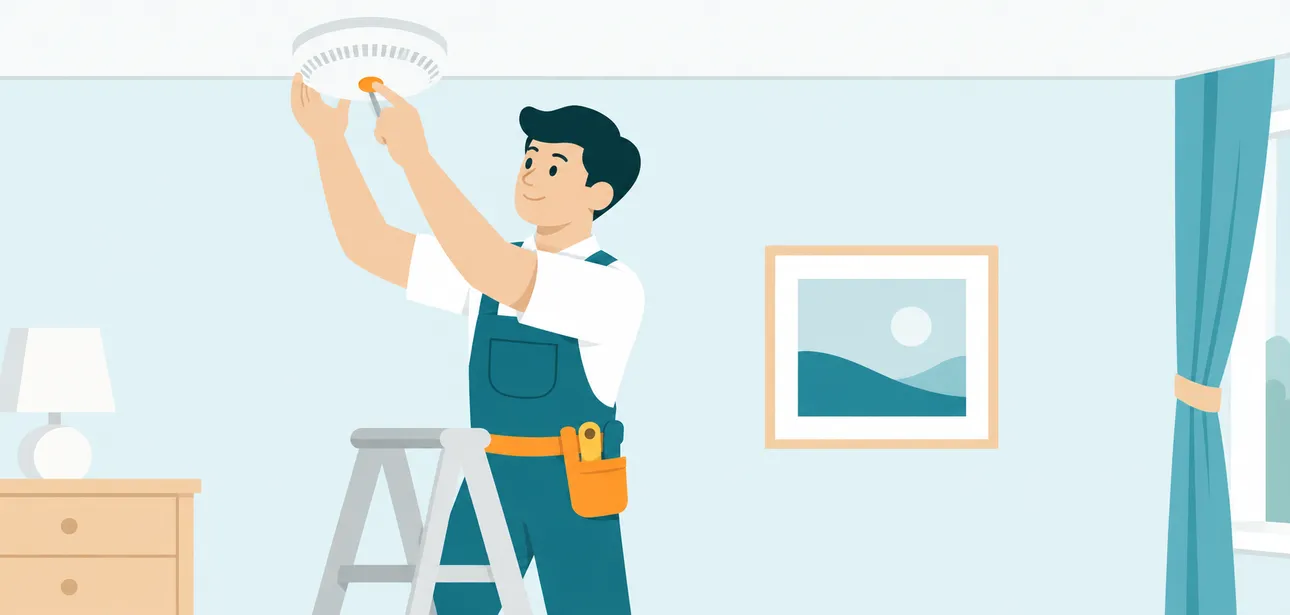
Smoke & CO Alarm Installation (Battery-Powered)
Not enough alarms at home, alarms that have expired, or one that keeps giving a "chirp" every so often? Your handyman can install, replace and remove battery-powered smoke alarms, carbon monoxide (CO) alarms and combination alarms in your home, including 10-year sealed lithium battery models and plug-in CO alarms. They can also replace batteries, deal with chirping, and set up same-brand wireless interconnection or smart alarms, then test each alarm once the work is done.
- Service area
- Vancouver, Burnaby and Richmond
Common issues
Alarm keeps chirping
A chirp can mean a low battery, end of life or a fault, and chirp patterns vary by brand and model; your handyman checks the model and the date on the back label to decide whether to replace the battery or the whole alarm.
Alarms have been up for many years
Smoke alarms generally need replacing after about 10 years and CO alarms after about 7–10 years, with the start date depending on the model; you can share a photo of the back label so your handyman can review it first.
Not enough alarms in a new or older home
There should be suitable alarms on every storey (including the basement), in sleeping areas and inside bedrooms; your handyman recommends how many alarms to install and where, based on your home's layout and the manufacturer's instructions.
Gas appliances or an attached garage at home
Homes with a gas furnace, water heater, fireplace, gas cooking appliances or an attached garage can add a CO alarm or combination alarm near the bedrooms.
Frequent false alarms when cooking or showering
The alarm may be too close to the stove, the kitchen doorway or the bathroom; your handyman checks its location and type and recommends moving it or replacing it with a suitable model.
Want to link several alarms together
Battery-powered alarms of the same brand and compatible models can be wirelessly interconnected, so when one detects a hazard, the whole set sounds together; alarms from different brands generally can't be interconnected.
Want alarm alerts on your phone
Once a battery-powered smart alarm is installed, it can connect to your home Wi-Fi and a phone app; you'll need to sign in to your own account.
What the pro will do
- 1
Your handyman finds out your home type, number of storeys, bedroom locations, the number and location of existing alarms, and whether you have gas appliances or an attached garage. If you have existing alarms, please share photos of the front and the back label, as well as the ceiling or wall after the alarm is taken down.
- 2
On arrival, your handyman checks the power type, dates and locations of existing alarms, tells apart the alarms in your unit from building fire alarm system devices, and recommends where to install; work starts only after the scope and price are confirmed. If additional installations or battery replacements within the scope are needed, your handyman will confirm the details and price with you first.
- 3
Following the manufacturer's instructions, your handyman mounts the base, installs and activates the alarms, or replaces batteries, pairs wireless interconnection and sets up the app, then takes the replaced old alarms away to a depot. If they find hardwired alarms, building fire alarm system devices, a need for a new outlet or other work outside this service, your handyman will stop first and explain; that work must be arranged separately.
- 4
Each alarm is tested with its test button, and each alarm in an interconnected set is triggered in turn to test it; your handyman records the installation date and explains the expiry date, routine testing and maintenance.
Good to know
Leave first if an alarm keeps sounding
If an alarm sounds continuously (smoke alarms usually in groups of 3 beeps and CO alarms usually in groups of 4, depending on the model), leave right away and call 911; don't wait for an installation service.
Take photos of the labels in advance
The model, date and ULC or CSA certification mark on the back label help determine whether the alarm has expired and whether to replace the battery or the alarm; having a battery compartment doesn't mean an alarm is battery-powered, as hardwired alarms may also have a backup battery.
Choose Canadian-certified models if buying your own
Smoke alarms should be certified to CAN/ULC-S531 and CO alarms to CSA 6.19; please choose models that haven't expired, and keep the box for your handyman to check.
Don't remove batteries because of false alarms
Removing the battery stops the alarm from working; if it often goes off falsely, check its location or model instead of disabling the alarm.
Test and clean regularly
Press the test button regularly as the manufacturer recommends, and vacuum the alarm's casing to clean it; don't paint alarms, cover them as instructed during renovations, and remove the covering once the work is finished.
Keep a distance from the stove
BC and some municipal fire departments recommend that smoke alarms be at least 3 metres from a stove or cooking appliance; this is a fire department recommendation, not a regulation.
Local tips
Battery-powered alarms can't replace hardwired ones
About two-thirds of homes in Metro Vancouver were built in 1981 or later. The BC Office of the Fire Commissioner notes that dwelling units built after the 1979 building code changes must have smoke alarms that are permanently connected to a power source and interconnected; replacements must not lower the level of protection, but battery-powered alarms can be added in addition.
CO alarm requirements in Vancouver
BC doesn't currently require CO alarms in existing homes; the City of Vancouver, however, requires CO alarms in residential buildings with fuel-burning appliances or a garage. Battery-powered, plug-in or hardwired alarms are all acceptable, but they must be CSA-certified models installed inside bedrooms or within 5 metres outside bedroom doors.
Rental units
BC residential tenancy guidelines require landlords to install alarms and keep them working, including an annual check and replacing batteries at least once a year; tenants should notify the landlord to arrange repairs and may add their own battery-powered alarms, but should get the landlord's consent before removing or replacing the landlord's alarms.
Strata and multi-unit buildings
Hallway detectors in multi-unit buildings and heat detectors inside units are part of the building fire alarm system and must be handled by a qualified technician arranged by the strata or property management company; standalone alarms inside a unit are generally the owner's responsibility, but if the strata has a uniform arrangement, the strata's rules take precedence.
Free fire department programs
Some city fire departments offer free installation for eligible households, such as Surrey (detached houses, duplexes and townhouses), Port Coquitlam (residents in need) and the City of North Vancouver (seniors and people with disabilities); the Richmond fire department says it doesn't give out alarms or replace batteries. For other cities, please check with your local fire department.
Ceilings in older buildings
In homes built before 1990, textured ceilings may contain asbestos; only the screw holes needed to mount the base are drilled during installation. If you know the year the building was built or have an asbestos test report, please let your handyman know in advance; if the year built is unknown, please say so as well. The building's age alone doesn't mean the ceiling definitely contains asbestos.
Recycling old alarms
Metro Vancouver waste facilities ban the disposal of electronic and electrical products such as alarms, so old alarms should go to a Product Care depot. Most cities have a depot, but none was found in Port Moody or White Rock at the time of checking, so you'll need to go to a nearby city.
This service only covers smoke, CO and combination alarms inside a residential unit that aren't connected to fixed wiring, including replaceable-battery models, 10-year sealed lithium battery models and plug-in CO alarms that plug into an existing outlet, as well as battery replacement (including backup batteries in hardwired alarms), same-brand wireless interconnection, smart alarm app setup, testing, and removal and recycling of old alarms. It doesn't include installing, replacing, relocating or removing hardwired alarms; replacing hardwired or wire-interconnected alarms with battery-powered ones; building fire alarm system devices; adding new outlets or circuits; inspecting or repairing gas appliances; fire compliance certificates or periodic annual inspections; patching old screw holes; or scraping ceiling material or asbestos abatement. Testing only shows that an alarm's circuitry, sounder and battery are working at that time; it can't guarantee detection of every fire or CO situation. Alarm placement follows the manufacturer's instructions and applicable guidelines; wireless interconnection range is affected by the building's structure. Final arrangements depend on your handyman's on-site assessment, property rules and your city's requirements.
Post this job in the app
Describe the job, add photos and get quotes from pros nearby. Posting is free for clients, and you don’t have to hire anyone.
Related services
- Bathroom Accessory Installation (Towel Bars, Toilet Paper Holders, Grab Bars)
- Cabinet Hinge & Drawer Slide Repair
- Caulking & Resealing (Tubs, Sinks, Windows)
- Childproofing Installation
- Door & Window Adjustment (Doors That Won't Close, Sticking Sliding Doors and Windows)
- Door Hinge, Handle and Lock Replacement